Es mostren els missatges amb l'etiqueta de comentaris Blood Pressure. Mostrar tots els missatges
Es mostren els missatges amb l'etiqueta de comentaris Blood Pressure. Mostrar tots els missatges
possibles grups de col·laboració
Didac Gómez Salinas IMEC (Belgica) el meu grup es el grup de
“Connected Health Solutions”, que es basicament circuits i sistemes per
Biomedical applications
https://www.imec-int.com/en/wearables
https://www.imec-int.com/en/wearables

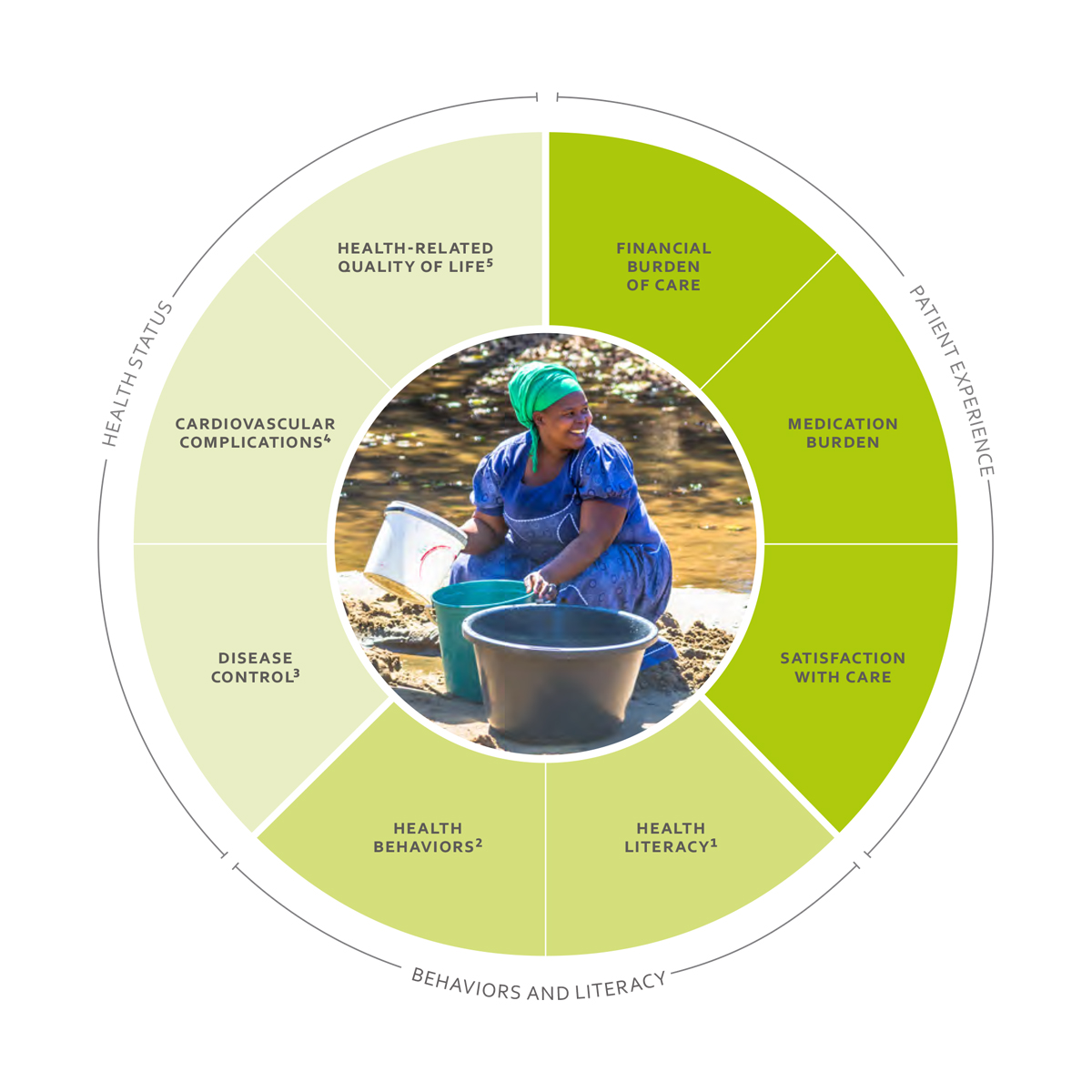
https://www.resolvetosavelives.org/saving-lives-from-cvd
Improved treatment of high blood pressure
High blood pressure kills more people than all infectious diseases combined – nearly 10 million people a year. Treatment is low-cost, simple, and can be done by existing health programs, with funding leveraged from governments and other sourceHalf of CVD deaths in poorer countries among people under 70 vs. one fifth in rich countries
Solar Powered Raspberry Pi
http://www.instructables.com/id/Solar-Powered-Raspberry-Pi/
Create a portable battery and solar powered Raspberry Pi Zero web server
So a brief list of the components:
Raspberry Pi2
16GB Class 10 MicroSD card
4G LTE USB modem
100Wp MonoCrystalline PV panel
52Ah SLA battery
10A Solar charge controller with advanced charging (including float charge) and temperature compensation
INA219 board for voltage monitoring and graphing on the web
12-to-5V stepdown regulator
A well built enclosure for the whole thing to sustain the rain, snow, and the burning 35C during summer
Create a portable battery and solar powered Raspberry Pi Zero web server
How to Use Solar Cells to Power a Raspberry Pi 3 Single Board Computer
How to build a solar powered Raspberry Pi #piday #raspberrypi @Raspberry_Pi
So a brief list of the components:
Raspberry Pi2
16GB Class 10 MicroSD card
4G LTE USB modem
100Wp MonoCrystalline PV panel
52Ah SLA battery
10A Solar charge controller with advanced charging (including float charge) and temperature compensation
INA219 board for voltage monitoring and graphing on the web
12-to-5V stepdown regulator
A well built enclosure for the whole thing to sustain the rain, snow, and the burning 35C during summer
Solar Power for Raspberry Pi
https://www.voltaicsystems.com/blog/powering-a-raspberry-pi-from-solar-power/
This post will walk you though how to protect your Raspberry Pi while powering it from a solar-powered system, and provide some tips for reducing the power consumption. Our desired goal is to power the Raspberry Pi with only a small solar panel (which you’ll see is not easy considering how power-hungry these boards are), so we’ll provide you with the know-how and tools necessary to reduce the power consumption.
Overview:

This post will walk you though how to protect your Raspberry Pi while powering it from a solar-powered system, and provide some tips for reducing the power consumption. Our desired goal is to power the Raspberry Pi with only a small solar panel (which you’ll see is not easy considering how power-hungry these boards are), so we’ll provide you with the know-how and tools necessary to reduce the power consumption.
Overview:
- How to protect the Raspberry Pi by safely and autonomously turning it off
- How to cycle the Raspberry Pi on and off to reduce power consumption
- Third party boards to help manage powering the Pi on and off
- How to appropriately size your solar panels to maintain the Pi after you’ve reduced the power consumption
CIMTI Centre per la Integració de la Medicina i les Tecnologies innovadores
http://cimti.cat/ca/
CENTRE PER L'IMPACTE.
Accelerant el cicle d’innovació en salut mitjançant un instrument basat en el CIMIT de Boston que aconsegueix la maximització de l’impacte en la salut global a partir de la col·laboració entre experts a través del desenvolupament i la implementació de solucions per millorar el benestar dels ciutadans.
CENTRE PER L'IMPACTE.
Accelerant el cicle d’innovació en salut mitjançant un instrument basat en el CIMIT de Boston que aconsegueix la maximització de l’impacte en la salut global a partir de la col·laboració entre experts a través del desenvolupament i la implementació de solucions per millorar el benestar dels ciutadans.
Qui som
El CIMTI.cat és un projecte de país, impulsat per LEITAT, amb un conveni amb el Departament de Salut – AQuAS i amb una aliança estratègica amb el CIMIT de Boston. Més info
La missió és posar en valor la innovació del sistema sanitari social del país, per fer realitat els projectes que tinguin gran impacte en la salut amb una visió global.
CIMIT: Consortia for Improving Medicine with Innovation & Technology
CIMIT: Consortia for Improving Medicine with Innovation & Technology
AUCOOP Reunió 4 octubre 2017
Projectes realitzats a l'estiu 2017:
- Ghana: Nil i Janna. Contrapart Nasco
- Ethiopia: Estudiants enginyeria Física. Contrapart IPI-cooperació
- Ethiopia: Arnau, Albert, contrapart Hospital Pediatric de Meki
- Ethiopia: Adria'ns Juandiego, Quim, PereRiu. BloodPressure UnderPressure. Contrapart Hospital Gambo
- Nepal
- Nicaragua
Treball de les diferents comissions:
- Funcionament actual.
- Problemes detectats.
- Possibles solucions.
- Nous membres
- Noves comissions:
- contactes amb altres ONGs de la UPC
Projectes que continuen: i cal gent!
- BloodPressure UnderPressure
- Ethiopia- IPICoop
- Registre d'expedients mèdics (seguiment projectes Ethiopia Meki i Woldija)
- Projecte Ghana Hospital?
Projectes en marxa:
- Projectes CBI-CERN:
- Virtual Reality Training MSF
- Girls amb STEM (Natàlia)
- Projecte PAE:
- OCR d'expedients mèdics fets en paper
- TFG Marc Pons-MSF: Beneficiary Satisfaction
- Equipament mèdic - MSF. Estudiants del màster de Bioenginyeria
Nous projectes:
- Proposta amb ESADE i el seu màster en SUD
- Projecte assistència en implementació d'ERP a Casa Vinculos, Estelí, Nicaragua
- Col·laboracions mixtes de cara a projectes estiu 2018
- Projectes amb MSF:
- i ASF. Projecte info hospital, cursos, vídeos, entreteniment..
- DHIS2

Blood Pressure Under Pressure
Learning to Predict Blood Pressure with Deep Bidirectional LSTM Network. PAPER
Around 3 in 10 deaths globally are caused by cardiovascular diseases (CVD) - diseases of the
heart and blood vessels that can cause heart attacks and stroke. 2 As the leading risk factor
of CVD (Lim et al., 2013), high blood pressure (BP) has been commonly used as the critical
criteria for diagnosing and preventing CVD. High BP, which is also known as hypertension,
normally develops without obvious symptoms at early stage, making it a “silent killer”.
Therefore, accurate and continuous BP monitoring during people’s daily live is extremely
imperative for CVD prevention and diagnosis. In addition, blood pressure variability (BPV)
reflects how a cardiovascular system regularize itself and response to external stimulus, and
is another critical cardiovascular indicator that can only be obtained through continuous
and long-duration BP monitoring.
Current BP measurement devices, e.g., Omron products, are cuff-based and therefore
bulky, discomfort to wear, and only suitable for snapshot measurements. These disadvantages
restrict the use of the cuff-based devices for continuous and frequent BP measurement,
which are essential for nighttime monitoring and precise diagnosis of different CVD symptoms.
Recent advancements in sensing technologies provide a wearable sensor network
solution that can achieve cuffless and continuous BP monitoring (Chan et al., 2007; Zheng
et al., 2014). These new emerged sensing technologies can detect several human physiological
signs through contacting corresponding sensors to the human body. For example,
electrocardiography (ECG) sensor can detect tiny skin impedance variations that arise from
the hearts electrophysiologic pattern during each heart beat; photoplethysmogram (PPG)
sensor can probe blood volume variation inside arteries, and etc. While all these physiological
sensing signals contain enormous information of the functionality and health status of
our cardiovascular system, the data is difficult to mine effectively due to noisy observation,
missing value and varying length. Extensive research efforts have been made to develop
effective models to predict or estimate BP from the sensor output; examples include the
well established physiological modeling method - Pulse transit time model, and the recently
proposed machine learning approach - regression model such as support vector machine,
decision tree and etc
10 facts on the state of global health WHO


from:
A comparative risk assessment of burden of disease and injury attributable to 67 risk factors and risk factor clusters in 21 regions, 1990–2010: a systematic analysis for the Global Burden of Disease Study 2010
Subscriure's a:
Missatges (Atom)